

R-series and S-series update
Scania Dynamic
An update to the R- and S-series built around one question: what does the operation actually need. Around 2 percent lower total energy consumption, a cab reworked for the working day, and the same changes applied to combustion and battery-electric powertrains.
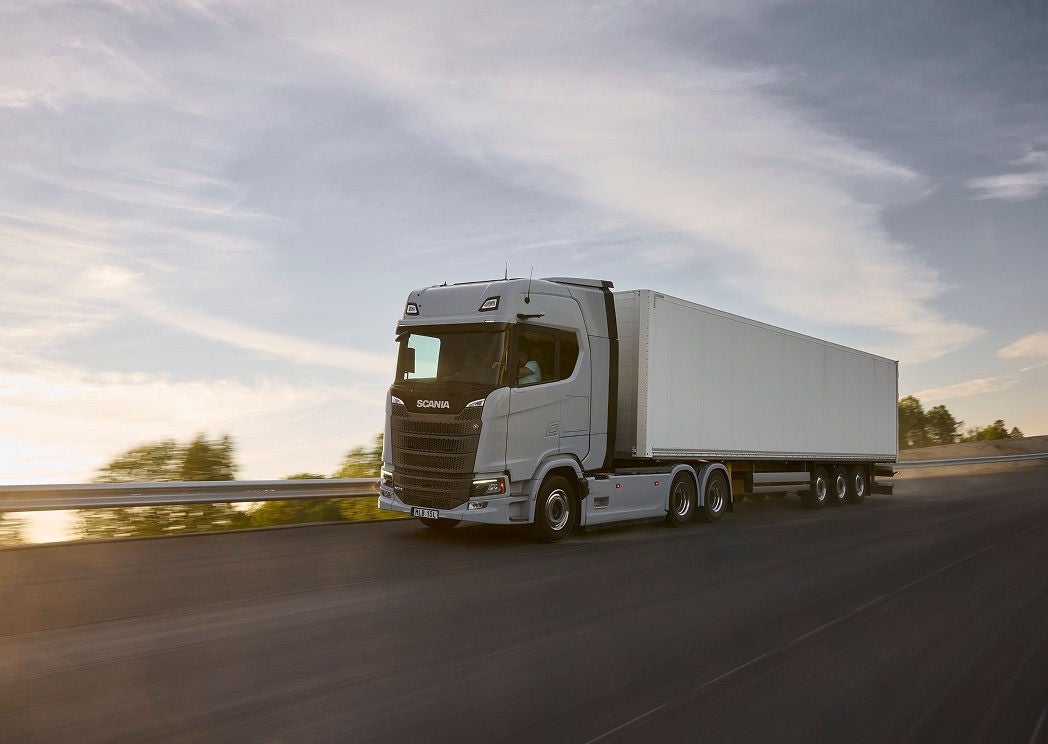
Scania Dynamic S-series. Photograph published by Scania.
~2%
Lower total energy consumption
Scania states approximately 2 percent, depending on specification and operating conditions. Applies to combustion and battery-electric powertrains.
720km
Electric range, up to
Scania states up to 720 km on selected 6x2*4 tractor units with the extended battery configuration. Real range depends on route, load, topography, climate and driving.
356kWh
Additional installed capacity
Approximately 356 kWh from two MP20 packs mounted behind the cab, in addition to chassis-mounted and under-cab batteries.
5stars
Euro NCAP, G- and R-series
Five-star result under the Euro NCAP Haulage assessment published 15 September 2026, with 96 percent in crash avoidance. A rating is a test result, not a guarantee of safety.
Energy efficiency
Two percent, found in the airflow
The efficiency gain does not come from a new engine. It comes from the shape of the vehicle and the parts that sit in the airstream. For a fleet running long distances every day, a small percentage applied across the whole operation is where the money is.
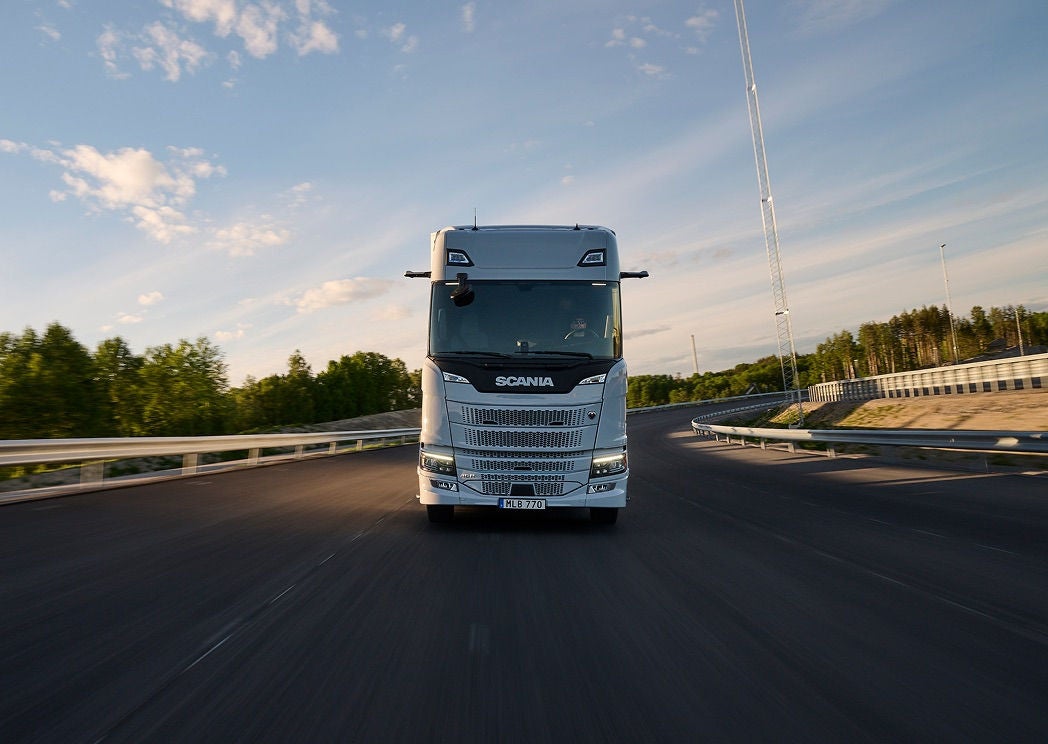
What Scania changed on the outside
- Rear-viewDigital mirrors with full-HD displays, replacing the mirror arms in the airstream. Standard, wide-angle and zoom modes, with heated lenses.
- Side skirtsExtended, to manage flow along the chassis.
- A-pillarsRedesigned.
- Door handlesNew design, reducing disruption at the cab surface.
- FrontProtruding front supporting Increased Vehicle Dimension (IVD) legislation. Scania reports up to 3 percent lower energy consumption from the new aerodynamic front.
Scania describes Dynamic as continuous improvement of an established platform rather than a new vehicle generation. The measured outcome depends on specification, route and operation. Ask for a figure calculated against your own duty cycle before assuming it applies to your fleet.
Electric long-haul
The routes that were difficult to electrify
Long-haul freight is a different problem from regional distribution. It combines range, payload and charging in one vehicle, and a shortfall in any one of the three makes the operation unworkable. Scania's answer puts capacity behind the cab and uses the IVD front to make room for it.
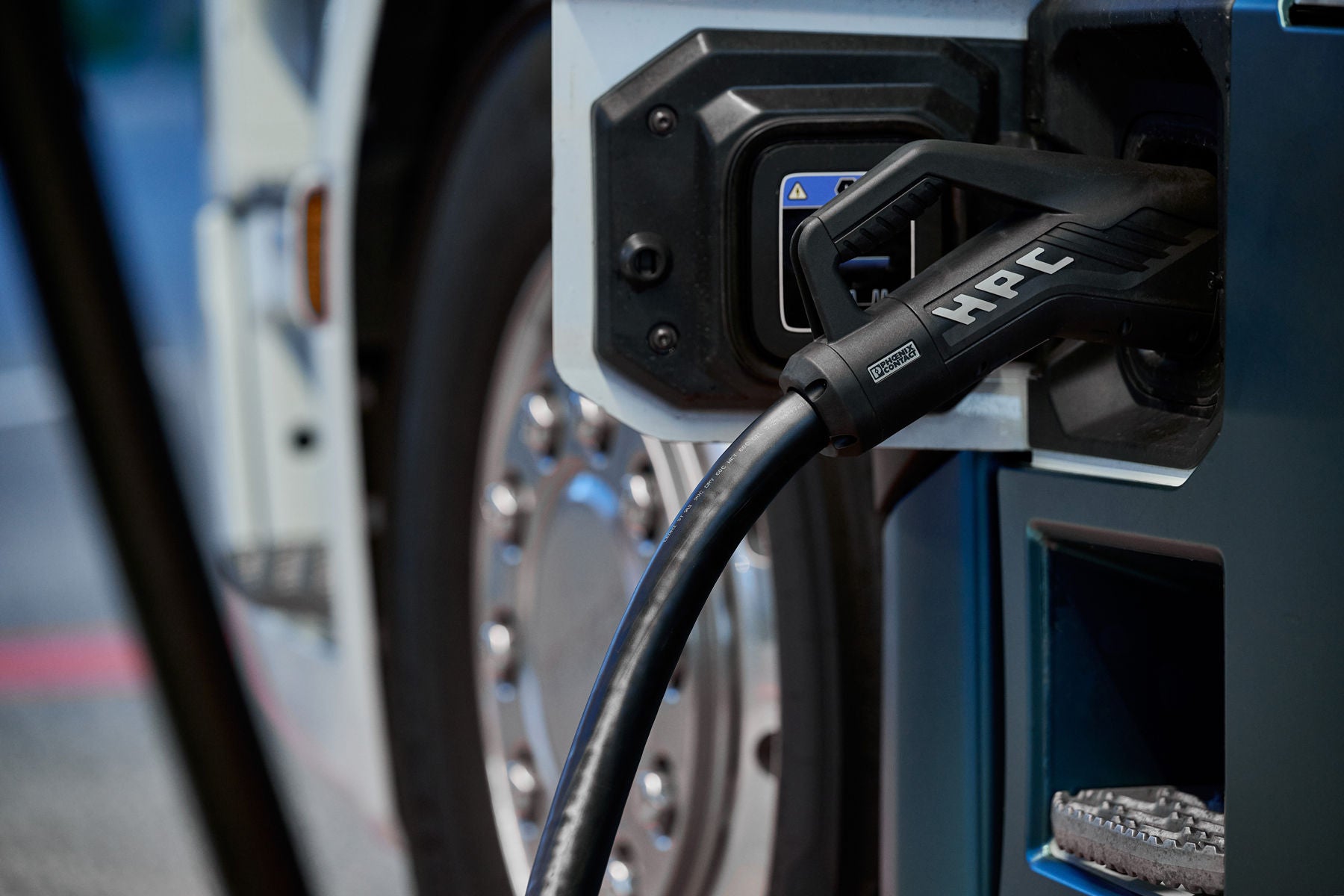
The configuration
- RangeUp to 720 km, on selected 6x2*4 tractor units.
- Added capacityApproximately 356 kWh installed behind the cab, from two MP20 packs, in addition to chassis-mounted and under-cab batteries.
- ChargingCompatible with the Megawatt Charging System (MCS).
- DimensionsVehicle length can exceed 16.5 m with the IVD front, while remaining compatible with standard European trailers and practical turning performance.
- EfficiencyUp to 3 percent lower energy consumption attributed to the new aerodynamic front.
Range figures describe a configuration under stated conditions. Whether a battery-electric vehicle suits a given operation depends on the route, the load, charging access along it, grid capacity at the depot, energy supply, vehicle availability and the economics. A vehicle specification does not resolve those conditions on its own.
Cab and driver
A working environment, not a showroom
A driver spends the shift in this space and often sleeps in it. Scania's stated reasoning is practical: a comfortable and intuitive environment can support concentration and reduce fatigue, which matters to the operation as well as to the driver.
800 mm reclining bed
Optional. Adjustable to 60 degrees, so the bunk works as a seat during breaks rather than only at the end of the shift.
Recycled content in the interior
Curtains made from 100 percent recycled material. Wall and ceiling panels containing 70 percent recycled material. Recycled content describes these components, not the whole vehicle.
Redesigned seat range
Reworked for ergonomics across the range, rather than a single premium option at the top of it.
Digital rear-view mirrors
Full-HD displays with adjustable reference lines, plus standard, wide-angle and zoom modes and heated lenses for poor weather.
Ambient+ lighting
Expanded ambient lighting options, including a northern lights theme. Upgraded headlamps with extended high-beam range and automatic high-beam adjustment.
Everyday details
A 15 W magnetic wireless charger and a ventilated external glove-storage tray reachable from outside the cab.

Read the caption
The image above is a genuine Scania photograph, but it predates this announcement. It is labelled that way here rather than presented as new product photography, because a campaign that dresses an older asset as a new one creates a claim nobody can support later.
Production work should use current approved Scania Dynamic interior photography from the Scania Brand Portal, with rights confirmed. The same applies to the Scania symbol and wordmark used in the header of this page, which are loaded from Scania's public site assets and are not licensed for reuse by publishing them here.
Safety
Five stars, and what that does and does not mean
On 15 September 2026 Euro NCAP published five-star results for the Scania G-series and R-series under its Haulage assessment, with 96 percent in crash avoidance. Both series also received the City Safe Award, joining the L- and P-series at five stars.
Autonomous emergency braking
AEB, assessed within the Euro NCAP Haulage protocol.
Vulnerable road user brake systems
VRUBS, covering detection of people around the vehicle.
Speed Sign Cruise Control
SSCC, matching set speed to recognised signage.
Curve Speed Cruise Control
CSCC, adjusting speed ahead of curve geometry.
Safe Stop Assist
Introduced with the Dynamic update, alongside Forward Distance Alert.
Assistance, not autonomy
These are driver assistance systems. They do not make the vehicle autonomous and they do not remove the need for trained operation, maintenance and compliance. No vehicle guarantees safety.
Scania intends to maintain the premium position of its truck offering by continuously improving established technologies and vehicle features.
Christian Levin, President and CEO, Scania. Quoted in Scania press material, 15 September 2026.
Safety in long-haulage starts with supporting the driver. Visibility, comfort, driver assistance, and vehicle control all contribute to safer operations.
Lars Gustafsson, Scania. Quoted in the Euro NCAP results release, 15 September 2026, where his title is given as Head of Trucks. Same-day Scania releases give his title as Senior Vice President and Head of Solutions Management. Confirm before publication.
Honest framing
A vehicle is one part of the system
Scania's public position is that the shift to sustainable transport depends on customers, energy providers, infrastructure operators, suppliers, policymakers and financiers working on the same deployment constraints. An update to a truck does not change grid capacity, charging availability along a corridor, fuel supply, financing or the pace of permitting.
- ElectrificationSuits some routes today and not others. Suitability depends on charging infrastructure, grid capacity, energy supply, vehicle availability and economics.
- Renewable fuelsCan support decarbonisation in some operations, but availability, feedstock, lifecycle impact, cost and regulation vary by market.
- Emissions boundaryA battery-electric vehicle can have zero tailpipe emissions and still carry lifecycle emissions. State which boundary a figure refers to.
- TargetsScania reports climate targets and outcomes separately, with baselines, scopes and reporting years. A target is not a result.
- ModularityA modular product system supports configuration breadth. It does not make every configuration appropriate for every duty.
Next step
Start with the operation, not the spec sheet
Bring the route, the load, the schedule, the depot and the service plan. A Scania representative can work from those constraints to a configuration, an energy source and a charging or fuelling plan, and can tell you what the figures on this page look like against your own duty cycle.
Evidence
Every figure on this page, with its conditions
| Figure | Status | Condition to keep | Source |
|---|---|---|---|
| ~2% energy | Requires caveat | Keep "approximately" and the dependency on specification and operating conditions. Applies across combustion and battery-electric. | Scania press release, 15 Sep 2026 |
| 720 km | Requires caveat | Keep "up to", the selected 6x2*4 tractor scope, and the extended battery configuration. Do not present as a typical operating range. | Scania press release, 15 Sep 2026 |
| ~356 kWh | Requires caveat | This is additional capacity behind the cab from two MP20 packs, not total installed capacity. | Scania press release, 15 Sep 2026 |
| Up to 3% front | Requires caveat | Attributed specifically to the new aerodynamic IVD front. Do not add it to the ~2% figure. | Scania press release, 15 Sep 2026 |
| 5 stars, 96% | Third-party result | Euro NCAP Haulage assessment. Applies to G-series and R-series 4x2 tractor and 6x2 rigid variants tested. A rating is a test outcome, not a safety guarantee. | Scania and Euro NCAP, 15 Sep 2026 |
| 100% / 70% recycled | Requires caveat | Describes curtains and wall and ceiling panels only. Not a claim about the vehicle, the cab as a whole, or lifecycle impact. | Scania press release, 15 Sep 2026 |
Claims not made on this page, and blocked by the source package: that any Scania vehicle or operation is emission-free, carbon-neutral, net-zero or fully sustainable without a stated scope and method; that Scania has completed the transition or met its climate targets; that any vehicle guarantees uptime, range, savings or safety; and that Scania approved this package.